

There was a time when selecting a lubricant was largely a matter of viscosity, base oil type, and a handful of well-understood additives. That time is gone.
Today’s lubricants are chemically dense, highly engineered systems. In many applications, they behave less like passive fluids and more like dynamic chemical reactors continuously evolving under load, temperature, shear, and surface interaction. And yet, much of how we select and evaluate them still assumes they are static materials.
That mismatch is where many engineering problems begin.
The Shift: From Formulation to System Behaviour
Modern lubricants are no longer defined by individual additives, but by interactions. A typical industrial oil may contain anti-wear agents, extreme pressure (EP) additives, friction modifiers, antioxidants, corrosion inhibitors, dispersants, and more. Each component is well understood in isolation. The challenge is that they are never used in isolation.
What matters is the system-level behaviour: how these components compete, cooperate, and react under real operating conditions.
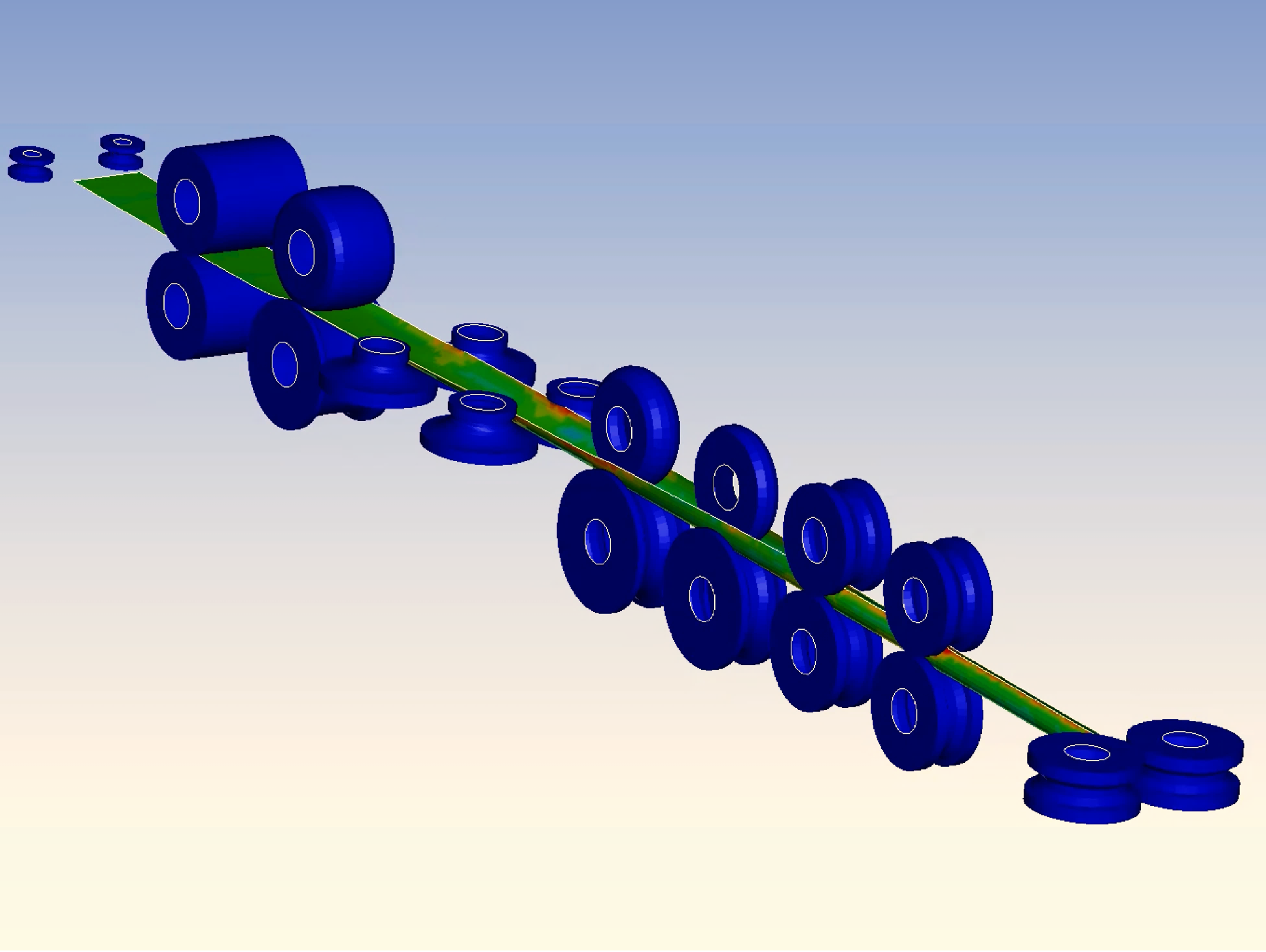
In one forming application we worked on in 2025, a lubricant that passed all standard EP and wear tests still led to severe surface damage during production. On paper, the chemistry was robust. In reality, the additives were interfering with each other under the specific contact conditions of high pressure, intermittent boundary lubrication, and elevated temperature gradients. The failure wasn’t due to a lack of additives. It was due to how they interacted.
It is worth stating plainly: a full system-level qualification of every lubricant against every combination of surface finish, metallurgy, and duty cycle is neither practical nor economically defensible. Standards exist precisely to balance this trade-off between accuracy and generalisability. The issue is not that standards are insufficient, they are indispensable, but that they operate as screening tools, not predictive models for every system-specific interaction.
Additive Synergy: When 1 + 1 > 2
At its best, lubricant formulation is about synergy, but that synergy exists at multiple levels and it is often misunderstood.
Within a single molecule, the chemistry is already multifunctional. Consider ZDDP (zinc dialkyldithiophosphate): it contains both phosphorus and sulfur within the same structure, and its decomposition pathways can produce complex phosphate- and sulfide-based layers with the same tribofilm. In that sense, the “synergy” is intramolecular: designed, predictable, and relatively well-characterised.
The more challenging and more consequential synergy occurs between different additives. For example, a formulation may combine a phosphorus-containing anti-wear additive (such as ZDDP or ashless phosphates) with separate sulfurised EP additives. Under certain conditions, these can act cooperatively, forming mixed tribofilms that offer better load-carrying capacity than either component alone. Friction modifiers can further stabilise these films by reducing interfacial shear, indirectly extending the life of the protective layer.
But this is where the story becomes less comfortable.
Synergy is rarely guaranteed. It is conditional: dependent on temperature windows, activation energies, surface state, and reaction kinetics. The same combination that performs exceptionally in one regime can become unstable or ineffective in another.
And critically, the boundary between synergy and interference is thin. The very mechanisms that allow additives to cooperate are the same mechanisms that allow them to compete.
Additive Competition: The Hidden Failure Mode
More often than most datasheets admit, additives compete and this is where many real-world failures originate.
Surface-active species, particularly those designed to adsorb or react with metal surfaces, are in constant competition for the same sites. A friction modifier may block an anti-wear additive from forming its film. A corrosion inhibitor may delay or suppress a necessary tribochemical reaction. Even base oil polarity can influence which species reaches the surface first.
In boundary lubrication regimes, this becomes critical. You are not dealing with a thick fluid film. You are dealing with a few nanometers of chemically active material. Whoever wins that surface determines performance.
The difficulty is not that these interactions are unknown, but that they are highly system-specific and difficult to screen comprehensively. Standard tests capture performance under controlled conditions, but they cannot realistically map every competitive pathway across all operating scenarios.
This is precisely why failures like the 2025 case occur. Not because standards are flawed, but because the specific combination of contact mechanics, surface condition, and additive competition fell outside what those standards were designed to represent.
A full system-level analysis might have identified the issue earlier, but in practice, such analysis is often constrained by time, cost, and access to specialised tribological testing. Engineering decisions are made under these constraints, not in idealised conditions.
Tribochemistry: Where the Real Action Happens
The most important processes in modern lubrication are not physical, but chemical.
Under load and temperature, additives decompose and react with the surface, forming tribofilms. These films are not static coatings. They grow, shear, worn, and reform continuously.
The kinetics of these reactions matter as much as the chemistry itself. A protective film that forms too slowly is effectively useless in a high-speed contact. One that forms too aggressively may increase friction or lead to brittle layers that spall.
What is often overlooked is that tribochemistry is highly sensitive to local conditions such as flash temperatures, asperity contact pressures, and surface chemistry at the micro- or nano-scale. Two systems with identical bulk conditions can behave very differently if their surfaces differ slightly in composition or roughness.
Surface Chemistry: The Missing Variable in Most Decisions
Engineers often talk about lubricants as if they are independent of the surfaces they protect. In reality, the surface is half the system.
The same lubricant can behave differently on alloy steel, stainless steel, or coated surfaces. Oxide layers, work hardening, residual stresses, and even prior chemical exposure can influence how additives react.
This is particularly evident in metal forming and high-load applications. We have seen cases where a lubricant performed exceptionally on one batch of material and failed on another, despite identical specifications. The difference was subtle: a change in surface oxide chemistry from the upstream process.
No standard lubricant test accounts for that directly, and it is not designed to.
Base Oils Are No Longer Passive
There is also a persistent misconception that base oils are inert carriers. That is increasingly untrue.
Modern base stocks, especially synthetics, can influence additive solubility, stability, and reactivity. Polar base oils, for example, can compete with additives for surface adsorption. Some can even participate in tribochemical processes themselves.
As formulations become more complex, the line between “base oil” and “active component” continues to blur.
The Limits and Role of Standards and Datasheets
Standards remain essential. They provide a common language and baseline performance metrics, and they are indispensable for screening and comparability.
But they are not predictive tools for complex, system-specific behaviour.
A lubricant that meets ISO or ASTM requirements may still fail in a specific application, not because the standards are inadequate, but because they are designed to generalise across a wide range of conditions.
In practice, the gap is not between “standards” and “reality,” but between generalised testing and specific application behaviour. Bridging that gap does not require abandoning standards, but it requires understanding where they stop being informative.
In many cases, the most valuable insights come from targeted, application-relevant testing or from failure analysis that focuses on where a lubricant stops working, not just where it passes.
What This Means for Engineers
If modern lubricants are chemical reactors, then selection and application must still be treated as an engineering trade-off, not an idealised optimisation problem.
A few practical implications:
- Standards are your first filter, not your final answer.
- System-level behaviour matters, but must be pursued selectively, where risk justifies the cost.
- Surface condition and upstream processes can outweigh formulation differences.
- Failure analysis should include chemical and tribological mechanisms, not just mechanical observations.
Most importantly, it requires a shift in mindset, not toward complexity for its own sake, but toward relevance. Not every system needs deep tribochemical analysis. But when failures occur, or margins are tight, that is often where the real answers lie.
Verdict on Lubricant Chemical Complexity
The increasing chemical complexity of lubricants is not a problem to be solved, but a reality to be managed.
The question is no longer “Is this a good lubricant?”
It is: How will this chemical system behave in my mechanical system, on my surfaces, under my constraints?
That is a harder question.
But it is also a more honest one.